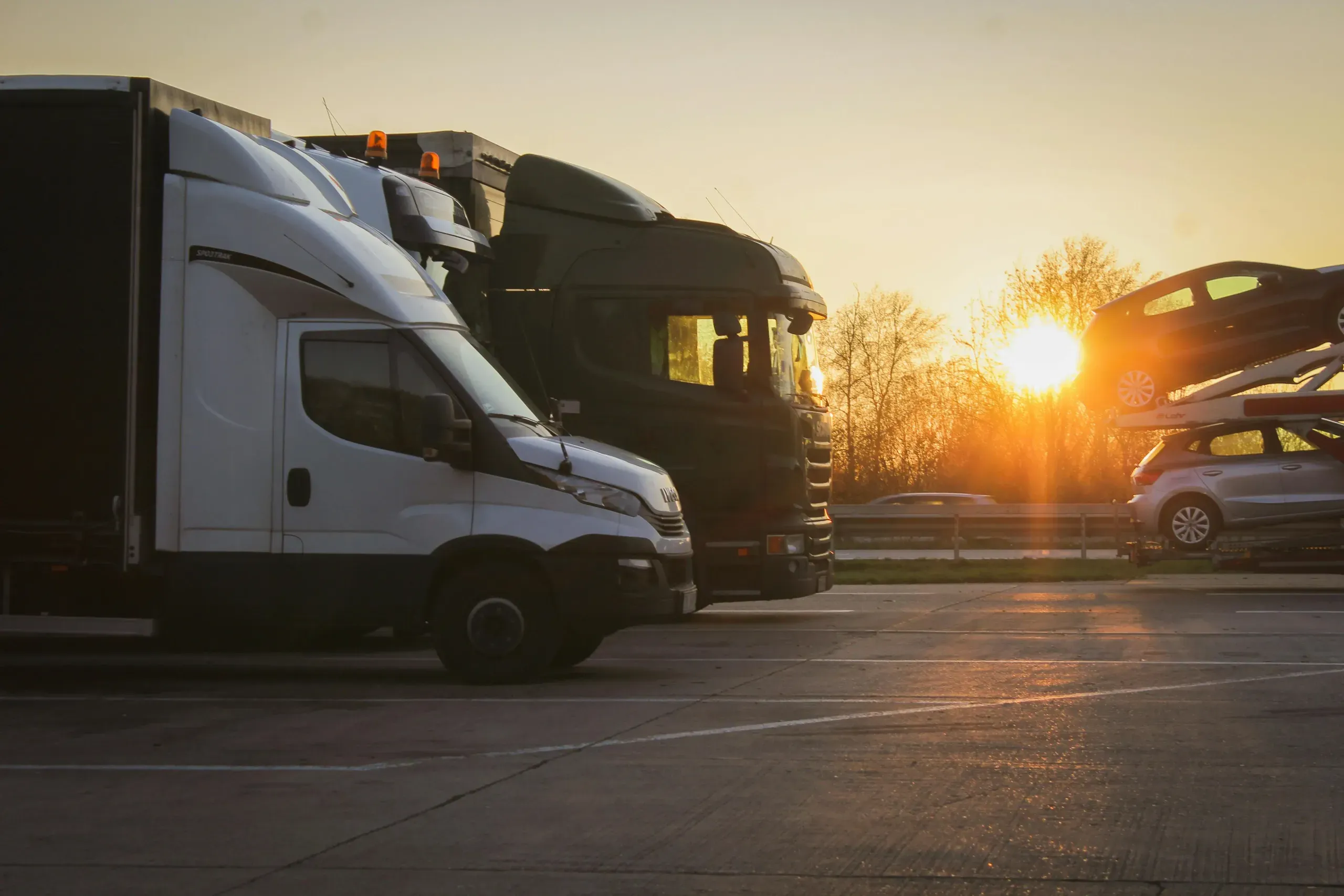
Ship Car from West Virginia to Colorado
Shipping a vehicle from West Virginia to Colorado covers approximately 1,509 miles, with most carriers completing the transit in 4 to 6 days. This route typically follows I-64 and I-70, crossing through the heart of the Midwest before reaching the Front Range. As a referral service, Ship Car Pros connects you with vetted carriers equipped for this specific long-haul corridor. Below, we break down everything you need to know about shipping costs, transit expectations, the booking process, and how to prepare your vehicle for its journey west.
- No-obligation quote within 2 minutes
- Price all-inclusive
- No charge until driver confirmed
- Distance
- 1,509 mi
- Transit time
- 4–6 days
- Open carrier from
- $850
How much does it cost to ship a car from West Virginia to Colorado?
Shipping a vehicle from West Virginia to Colorado typically costs between $850 and $1,125 for open transport, while enclosed shipping ranges from $1,375 to $1,825, with a standard transit time of 4 to 6 days to cover the 1,509-mile distance. These figures represent the total market rate required to secure a spot on a carrier's trailer. As a referral service, Ship Car Pros identifies the current market price for your specific route and matches you with an independent carrier from our vetted network who can execute the job at that rate. Your final quote is driven by several stacking factors, including the size of your vehicle, the time of year, and how close you are to major interstates like I-70. Understanding these variables helps ensure you receive an accurate, all-inclusive price that sticks.
What factors affect car shipping cost?
The final price to move your vehicle from West Virginia to Colorado isn't a single flat fee; it is built from several logistical variables that determine how much space and time your shipment requires. Ship Car Pros identifies these factors to ensure your quote is realistic and attractive to active carriers.
Here are the primary drivers of your shipping cost:
- Vehicle dimensions and weight: Larger vehicles like full-size trucks or SUVs occupy more trailer space and increase fuel consumption.
- Transport type: Open trailers are the standard, while enclosed transport offers more protection at a higher price point.
- Pickup and delivery flexibility: Providing a wider window of four to seven days allows carriers to optimize their routes for a lower rate.
- Seasonal demand: Prices often fluctuate during peak moving seasons or winter months when driver availability shifts.
- Route accessibility: Locations directly off I-64 or I-70 are generally more affordable than remote, rural mountain towns.
- Vehicle operability: Cars that cannot be driven onto the trailer require a winch and specialized equipment to load.
Open vs. enclosed car transport: which should you choose?
Deciding between open and enclosed transport comes down to your vehicle's value and your tolerance for the elements. Open transport is the industry standard, used for roughly 85% of shipments. On the 1,509-mile haul from West Virginia to Colorado, an open carrier typically costs around $936. Your car will travel on a multi-car trailer similar to those delivering new vehicles to dealerships. While exposed to road dust and weather, it is fully insured and represents the most cost-effective choice for daily drivers.
Enclosed transport typically costs around $1,524 for this route-roughly 1.6 times the open rate. This premium buys a fully shielded environment, protecting the vehicle from stone chips, rain, and highway debris. Ship Car Pros recommends enclosed shipping for classic cars, luxury models with low ground clearance, or vehicles valued over $75,000. If you are moving a standard SUV or sedan, open transport is safe, reliable, and the most common way to get your vehicle west.
- Open carrier
- $850–$1,125
- Standard 7–10 car hauler.
- Enclosed carrier
- $1,375–$1,825
- Sealed trailer for high-value vehicles.
How long does it take to ship a car from West Virginia to Colorado?
Shipping a vehicle from West Virginia to Colorado typically takes between 4 and 6 days to cover the 1,509-mile distance. While a non-stop drive might take less than 24 hours, carriers generally cover about 400 to 500 miles per day once they are on the road. This timeframe accounts for the reality of long-haul trucking, including mandatory rest stops, refueling, and the time required to navigate through midwestern traffic hubs along I-70. These estimates represent the transit time once your vehicle is loaded; the total window can also be influenced by how quickly a carrier is assigned and the specific locations for your pickup and delivery. Factors like seasonal weather across the plains or your choice of transport type can also shift these timelines.
Which routes do carriers usually take?
Most carriers moving vehicles from West Virginia to Colorado follow a direct westward path along I-64 W and I-70 W. The journey typically begins with pickups in population centers like Charleston or Morgantown before the driver heads through the Midwest. Once the truck crosses the Mississippi River, I-70 W serves as the primary backbone of the route, cutting through Missouri and Kansas.
As the terrain transitions from the rolling Appalachian hills to the flat Great Plains, transit speeds remain consistent. However, drivers must prepare for the significant elevation climb as they approach the Colorado Front Range. For deliveries beyond Denver into mountain towns like Silverton or Aspen, carriers often face strict restrictions on high-altitude passes like Loveland or Independence Pass. Ship Car Pros works with drivers who understand these geographic hurdles, ensuring your vehicle stays on the most efficient interstate path until it reaches its final destination.
What can delay your shipment?
Transit times along the I-70 corridor are generally reliable, but specific geographic hurdles can introduce variability. During winter months, heavy snow squalls and mandatory chain laws at high-elevation spots like Vail Pass or the Eisenhower Tunnel often slow carrier progress. In West Virginia, dense fog banks near Flat Top Mountain on the Turnpike can trigger sudden traffic holds.
Logistics also play a role; if you are shipping from a rural hollow or to a remote mountain town like Aspen, carriers may need extra time to navigate tight switchbacks. Additionally, weekend bookings often see a gap, as many drivers pause pickups until Monday. If you are purchasing from an auction like Copart, missing gate pins or lot numbers will stall the driver at the gate, pushing back the entire schedule.
Popular Routes
Major city-to-city routes on the West Virginia → Colorado corridor.
| From | To | Approx. distance | Transit |
|---|---|---|---|
| Huntington, WV | Denver, CO | ~1,200 mi | 4-6 days |
| Charleston, WV | Colorado Springs, CO | ~1,250 mi | 4-6 days |
| Morgantown, WV | Aurora, CO | ~1,310 mi | 4-6 days |
| Parkersburg, WV | Fort Collins, CO | ~1,250 mi | 4-6 days |
| Wheeling, WV | Lakewood, CO | ~1,290 mi | 4-6 days |
| Weirton, WV | Thornton, CO | ~1,280 mi | 4-6 days |
| Martinsburg, WV | Greeley, CO | ~1,420 mi | 4-6 days |
| Fairmont, WV | Grand Junction, CO | ~1,510 mi | 5-7 days |
| Beckley, WV | Arvada, CO | ~1,290 mi | 4-6 days |
| Clarksburg, WV | Pueblo, CO | ~1,310 mi | 4-6 days |
How does shipping a car from West Virginia to Colorado work?
Shipping a car from West Virginia to Colorado is a straightforward three-stage process: securing an all-inclusive quote, coordinating the vehicle pickup, and completing the final delivery. You start by providing your vehicle details and timeline to get a fixed price. Once you confirm, Ship Car Pros identifies a vetted carrier from our network to handle the 1,500-mile haul. The driver then manages the loading and transport across the Midwest, keeping you updated until the vehicle arrives safely at your destination in Colorado.
What happens between booking and pickup?
Once you accept your quote, we move into the logistical phase of matching your vehicle with the right trailer heading west. Here is exactly what happens between the moment you book and the day your car leaves West Virginia:
- Post to the network: We list your shipment within our vetted network of independent carriers to find a driver currently running the I-64 to I-70 corridor.
- Carrier dispatch: A qualified carrier claims the load, and we verify their insurance and safety ratings before officially dispatching them to your location.
- Notification: You receive the carrier’s name, the driver’s direct phone number, and an estimated arrival date so you can coordinate the hand-off.
- Window confirmation: The driver calls you 24 hours in advance to narrow down a specific pickup window based on their current route progress and traffic.
- On-site inspection: The driver arrives at your address, performs a detailed 21-point inspection with you, and documents the vehicle's condition on the Bill of Lading before loading.
What is a bill of lading (BOL)?
The Bill of Lading (BOL) is the most critical document in the shipping process, serving as both your official receipt and a detailed condition report. At pickup, the driver performs a 21-point inspection, documenting any existing scratches or dents and taking photos of the interior and exterior. This creates a baseline for your vehicle’s condition.
When the carrier arrives in Colorado, you will perform the same inspection again. It is vital to examine your vehicle in good light before signing the final BOL. Once you sign, you are legally acknowledging the vehicle arrived in the stated condition. Ship Car Pros recommends keeping your copy of the pickup BOL handy to compare side-by-side with the delivery report, ensuring total transparency for the 1,500-mile journey.
After delivery: registration and inspection in Colorado
Once your vehicle arrives in Colorado, the clock starts on your state requirements. New residents have 90 days to register their out-of-state vehicle, while those who recently purchased a car must do so within 60 days. You must also obtain a Colorado driver’s license within 30 days of moving.
The registration process must be completed in person at a county motor vehicle office. You will need your out-of-state title, proof of Colorado insurance, and secure identification. Every vehicle entering from out of state requires a VIN inspection, which can be performed by local law enforcement or a licensed dealer. If you are moving to a Front Range county like Denver or Boulder, you will likely need to pass an emissions test as well. Be aware of the "Keep Colorado Wild Pass," a $29 fee automatically added to your registration unless you choose to opt out.
Back in West Virginia, do not cancel your insurance until you have officially surrendered your license plates to the DMV. Failing to return your plates before ending coverage can trigger a registration suspension and a $100 reinstatement fee. For more details on local forms and office appointments, visit the official Colorado DMV website.
How do you verify a car transport company is legitimate?
Verifying a car transport company starts with their federal credentials. Every legitimate broker or carrier must be registered with the Federal Motor Carrier Safety Administration (FMCSA). Ask for their Motor Carrier (MC) and Department of Transportation (DOT) numbers, then verify them through the official FMCSA Licensing & Insurance database. This lookup confirms if their operating authority is active and if they maintain the required cargo insurance levels for a 1,500-mile journey.
Financial red flags are often the easiest way to spot a scam. A reputable referral service or broker should never charge your credit card the moment you book. In this industry, the standard practice is to place a card on file but only process the deposit once a specific carrier has been vetted, assigned, and dispatched to your route. If a company demands an upfront "reservation fee" or payment via non-traceable methods like wire transfers or crypto, walk away.
Always insist on a written agreement before handing over your keys. This document should clearly state the all-inclusive price, insurance coverage details, and the cancellation policy. Finally, cross-reference their reputation through third-party platforms like the Better Business Bureau (BBB) and Transport Reviews. Ship Car Pros operates as a referral service, meaning we only connect you with companies that have already cleared these safety and licensing hurdles, protecting you from the "bait-and-switch" pricing common with unverified providers.
How do I prepare my car for shipping?
Preparing your vehicle for a 1,500-mile journey across the Midwest requires a few simple steps to ensure a smooth hand-off and safe transit. Since your car will undergo a detailed inspection at both ends of the route, following this checklist helps protect your investment and simplifies the driver’s job.
Follow these steps before the carrier arrives:
- Wash the exterior: A clean car is necessary for an accurate Bill of Lading. Dirt and road grime can hide small scratches or dings during the initial inspection.
- Document the condition: Take clear, dated photos of the vehicle from every angle, including the odometer and interior.
- Remove personal belongings: Clear out all toll tags, parking passes, and aftermarket GPS units. While most carriers allow up to 100 pounds of items in the trunk, these are not covered by the carrier's insurance.
- Check fuel levels: Keep the gas tank at roughly a quarter-tank. This provides enough fuel for loading and unloading but reduces unnecessary weight on the trailer.
- Secure the vehicle: Disable any active alarms and provide the driver with a complete set of keys, including the fob and trunk key.
Taking these precautions ensures your vehicle is ready for the climb into the Colorado Rockies without any logistical hiccups.
Specialty shipments from West Virginia to Colorado
Not every transport involves a standard daily driver. Moving a vehicle from West Virginia to Colorado often includes unique logistical hurdles, from retrieving a salvage purchase to coordinating a multi-car household move. Ship Car Pros specializes in these complex scenarios, connecting you with carriers who have the specific equipment and experience required for non-standard hauls. Whether your vehicle is stuck at an auction lot, doesn't run, or you have an entire fleet to move, we can help you navigate the requirements for:
How do you ship a car bought at Copart or IAA auction?
Shipping a vehicle purchased from a Copart or IAA auction requires specific documentation that differs from a standard residential pickup. Before a carrier can even schedule an appointment at the yard, you must provide three critical pieces of information: the lot number, the gate pin, and your buyer number. Additionally, the vehicle must be paid in full; carriers will be turned away at the gate if there is an outstanding balance on the invoice.
You should expect auction pickups to take an additional 1 to 3 days compared to a home pickup. These facilities operate on strict schedules and often require carriers to wait in long queues or schedule specific loading slots. Because many auction vehicles are inoperable, we must also ensure the assigned carrier has a winch or specialized loading equipment. Providing Ship Car Pros with your documentation immediately after purchase ensures we can coordinate with the driver to avoid storage fees at the auction lot.
How do you ship an inoperable car?
Shipping a vehicle that doesn't run requires more than a standard set of ramps. To move an inoperable car across the 1,500 miles to Colorado, we must match you with a carrier equipped with a specialized winch. The driver will use this heavy-duty cable system to pull your vehicle onto the trailer safely.
Keep in mind that for this process to work, the vehicle must still "roll, steer, and brake." If the wheels are locked or the steering column is seized, the carrier won't be able to guide it onto the deck. Because this equipment is less common and the loading process takes significantly more time and physical labor, shipping a non-runner typically adds a surcharge to the standard rate. Ship Car Pros ensures your assigned driver has the right gear so you aren't left waiting on a truck that can't actually pick up your car.
How do you ship multiple cars at once?
Relocating a multi-car household or moving a small fleet from West Virginia to Colorado is often more efficient than shipping vehicles individually. When you book multiple cars on the same route, the per-vehicle rate typically drops. This is because a carrier can fill several spots on their trailer at a single stop, reducing their overhead for fuel and loading time.
Ship Car Pros works to match these orders with a single carrier so your vehicles stay together throughout the 1,500-mile journey. While most families prefer their cars to arrive at the same time, very large loads or specialized vehicles might occasionally be split between two different trucks to ensure the fastest possible pickup. Whether you are moving two daily drivers or a collection of vehicles, bundling them onto one manifest is the most effective way to lower your total cost.
Is it cheaper to ship a car or drive it from West Virginia to Colorado?
Deciding whether to get behind the wheel or book a carrier for the 1,509-mile trip to Colorado depends on how you value your time and your vehicle’s longevity. When you look at the raw numbers, shipping is often the more economical choice. A typical open transport shipment for this route costs around $936. This is an all-inclusive figure that covers fuel, insurance, and the driver’s labor while keeping your odometer exactly where it is today.
Driving the distance yourself carries a much higher price tag than most people realize. Based on AAA’s 2024 "Your Driving Costs" data, which accounts for fuel, maintenance, and depreciation at $0.70 per mile, the drive alone costs roughly $1,056. Since the non-stop drive time is nearly 23 hours, you will realistically need at least two overnight stays. Adding $240 for modest lodging brings your estimated out-of-pocket total to $1,296.
Beyond the $360 difference in favor of shipping, there is the qualitative cost of the trip. Driving from West Virginia to the Front Range involves three full days of labor, navigating heavy I-70 truck traffic, and managing the fatigue of a transcontinental trek. Shipping with a referral service like Ship Car Pros allows you to fly to your destination in a few hours while a professional handles the wear and tear of the road.
| Ship it | Drive it | |
|---|---|---|
| Total cost | $850–$1,125 all-in | ~$1,416 (fuel + lodging + meals) |
| Your time | 0 hours | ~25 hrs driving + overnight |
| Wear & tear | None | 1,509 mi added; ~$0.10/mi depreciation |
| Risk | Insured in transit | Personal liability + fatigue |
For most West Virginia → Colorado shipments, ship is the better value once time and depreciation are counted.
Frequently asked questions
How much does it cost to ship a car from West Virginia to Colorado?
Shipping a car from West Virginia to Colorado typically costs between $850 and $1,125 for standard open transport. If you need an enclosed trailer for a classic or luxury vehicle, the price usually ranges from $1,375 to $1,825. Your exact quote depends on factors like vehicle size, the time of year, and how close your pickup and delivery locations are to major highways like I-70. Giving the carrier a flexible pickup window can also help lower your final rate.
How many days does it take to ship a car from West Virginia to Colorado?
It typically takes 4 to 6 days for a carrier to transport a vehicle across the 1,509-mile route from West Virginia to Colorado. This estimate covers the transit time once your car is actually loaded onto the truck. Federal regulations limit solo drivers to roughly 400 miles per day for safety. Factors like winter storms in the Rockies, midwestern traffic, or remote pickup locations can occasionally extend this timeline.
Do I need open or enclosed transport for my vehicle?
You should choose open transport for standard daily drivers and enclosed transport for high-value, classic, or luxury vehicles. Open trailers handle roughly 85% of all shipments. They are safe, fully insured, and cost significantly less. Enclosed transport costs about 1.6 times more for the West Virginia to Colorado route. It provides a fully sealed environment that protects vehicles worth over $75,000 from weather, road debris, and dust.
When do I pay the transport company for shipping my car?
You pay for your shipment in two separate stages. First, a deposit is charged to your credit card only after a carrier is officially confirmed and dispatched to your route. You pay the remaining balance directly to the driver when your vehicle is delivered. Most drivers accept cash, certified checks, or money orders at delivery. Never trust a company that demands full payment upfront before a truck is even assigned.
Is my vehicle fully insured while traveling from West Virginia to Colorado?
Yes, your vehicle is fully insured from the moment it is loaded in West Virginia until the driver hands you the keys in Colorado. By law, every active carrier must carry cargo insurance that covers vehicles in transit. Open carriers typically hold $50,000 to $250,000 in coverage per vehicle, while enclosed trailers carry higher limits. This bumper-to-bumper policy has zero deductible for you and covers any damage documented on the Bill of Lading.
Do I have to be present when the carrier picks up my car?
No, you do not need to be physically present when the carrier arrives to load your vehicle. You can designate a trusted friend, family member, or neighbor to hand over the keys and sign the initial paperwork. Your assigned representative just needs to be at the pickup location to walk around the car with the driver. They will help complete the Bill of Lading inspection to document the vehicle's condition before it leaves.
Can a carrier pick up or deliver my vehicle on a weekend?
Carriers will frequently deliver your vehicle on a weekend, but weekend pickups are much less reliable. Truckers unload whenever they reach their destination, regardless of the day. However, carrier activity drops significantly on Saturdays and Sundays. If you book a shipment late in the week, it usually will not get picked up until Monday or Tuesday. Flexibility is key if your schedule falls over a weekend.
Why is it a bad idea to book with multiple auto brokers at once?
Booking with multiple brokers causes you to bid against yourself on the national loading board. Since brokers do not own trucks, they all post your shipment to the same shared digital marketplace. When carriers see the exact same West Virginia to Colorado route listed multiple times, they know there is desperate demand. They will ignore the lower-priced listings and bid the price up, ultimately costing you more money and delaying your pickup.